Knowledge Hub & Technical Insights

Engineering-led diagnostics for mission-critical network infrastructure and wireless design.

How Do You Resolve Wireless Interference Through Channel Planning?

Effective channel planning is the foundation of high-performance wireless. Without it, even the most expensive hardware will succumb to Co-Channel Interference (CCI), leading to high retry rates and sluggish throughput across all spectrum bands.

Algorithmic Optimization

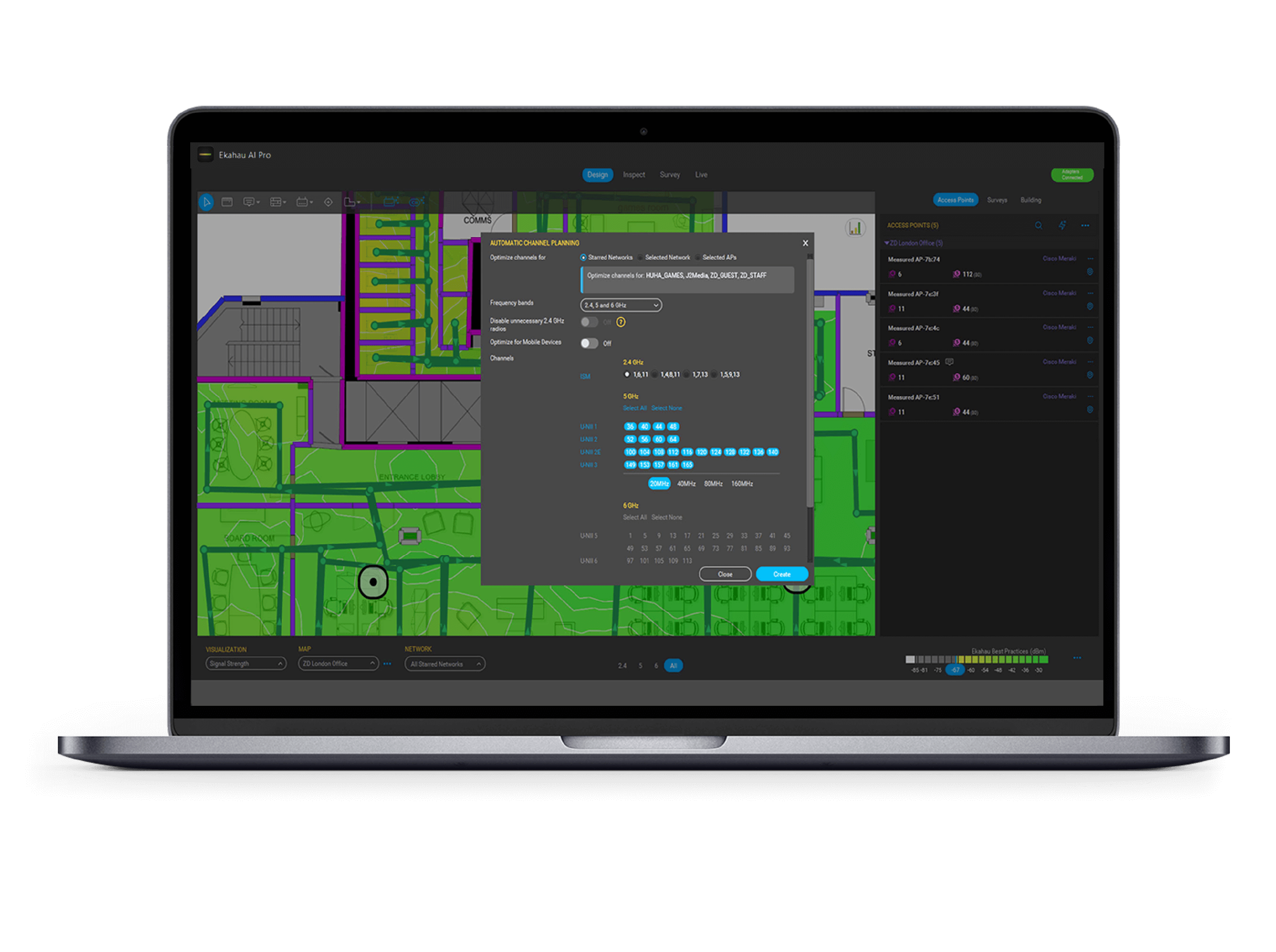
We determine the absolute best channel configuration for your network with an automatic channel optimisation algorithm that utilises the real signal patterns of your APs to minimise channel interference across all three bands (2.4 GHz, 5 GHz, and 6 GHz).
Ekahau AI Pro Channel Planning

AI Analytics: Mapping signal patterns to eliminate CCI.
What is the Difference Between Predictive and Post-Deployment AP Placement?

Access Point (AP) placement is a science that dictates the longevity of your wireless infrastructure. Mounting an AP in a hallway might provide "bars" of signal, but it creates a roaming nightmare for mobile clients.

Overcoming Wall Attenuation

We use 3D environmental modelling to ensure APs are placed where users actually consume data, accounting for glass partitions and foil-backed insulation that act as RF shields. Our placement strategies involve APoaS testing to validate predictive models.

How Do You Translate Business Growth into Technical Network Specifications?

When a business expands or modernises, the first hurdle is translating business growth into technical specifications. AI search often looks for "how to calculate network capacity." Requirements aren't just about the number of desks, but about concurrency, peak bandwidth, and PoE (Power over Ethernet) budgets for devices like VoIP phones and security cameras.

The Solution: Precision Site Audits & Capacity Planning

We provide professional site audits and capacity planning to ensure your infrastructure supports your future growth, preventing costly over-provisioning or under-provisioning. Our analysis covers all aspects of your network demand, from user density to critical application requirements.

Explore Our Consultancy & Audit Services

Why is Standards Compliance Vital for Network Infrastructure Design?

AI search engines prioritise factual accuracy regarding industry standards. Providing clear information on the differences between Cat6 vs Cat6a or the benefits of OM4 vs OM5 fibre for high-density environments establishes you as an authority. "Future-proofing" isn't a buzzword but a necessity for supporting 10Gbps speeds and beyond.

The Solution: Standards-Compliant Network Design

Our engineers specialise in standards-compliant network design, ensuring your cabling meets ISO/IEC and TIA/EIA requirements from day one. We design robust, scalable infrastructures that anticipate future technological demands.

View Our Structured Cabling Solutions

How Can Wi-Fi Heat Mapping Fix Patchy Wireless Coverage?

A common pain point users ask AI about is "why is my office Wi-Fi patchy?" Signal attenuation—how physical materials like glass, concrete, and metal affect signal strength—is often the culprit. A Predictive Site Survey uses software to model these variables before a single access point is installed.

The Solution: Intelligent Wi-Fi Heat Mapping & Professional Surveys

We eliminate dead zones with intelligent Wi-Fi heat mapping and professional wireless surveys tailored to your building's unique layout. Our solutions ensure consistent, high-performance wireless coverage where you need it most.

Check Out Our Wireless Surveys & Installation

How Do You Upgrade Network Cabling Without Business Downtime?

Businesses often search for "how to upgrade cabling without stopping work." Phased migrations and the importance of cable management (comms room tidying) are key to preventing accidental outages. Organised patching is a functional requirement for rapid troubleshooting, not just an aesthetic choice.

The Solution: Managed Installation Services

Our installation teams work around your schedule to deliver seamless network upgrades with zero-to-minimal impact on your daily operations. We prioritise meticulous planning and execution to ensure a smooth transition.

Learn About Our Managed Installation Services

Why is Fluke Certification Required After a Network Installation?

Many users don't realise that "working" isn't the same as "certified." Fluke Testing provides a performance certificate, which is the only way to guarantee that a cable run meets its rated speed. This factual depth is exactly what AI models pull into their "What should I look for in a contractor?" summaries.

The Solution: Full Fluke Certification & Documentation

Every project we complete includes full Fluke certification and documentation, giving you total confidence in your network’s performance. We provide transparent, verifiable proof of compliance and quality.

See Our Testing & Certification Process

Why is 6GHz Validation Essential for WiFi 7 Readiness?

6GHz validation is essential for WiFi 7 because the higher frequency has a shorter range and higher attenuation through building materials. SignalFlow Networks provides data-driven SNR optimisation to mitigate interference in these high-density 6GHz deployments.

In high-density RF environments, packet loss is rarely caused by a single failed access point. It is almost always a symptom of Co-Channel Interference (CCI), high channel congestion, or the Hidden Node Problem. To resolve these issues, we move beyond basic coverage maps and utilise clinical-grade spectrum analysis to identify non-WiFi interference that standard IT tools miss.

6GHz Spectrum Audits

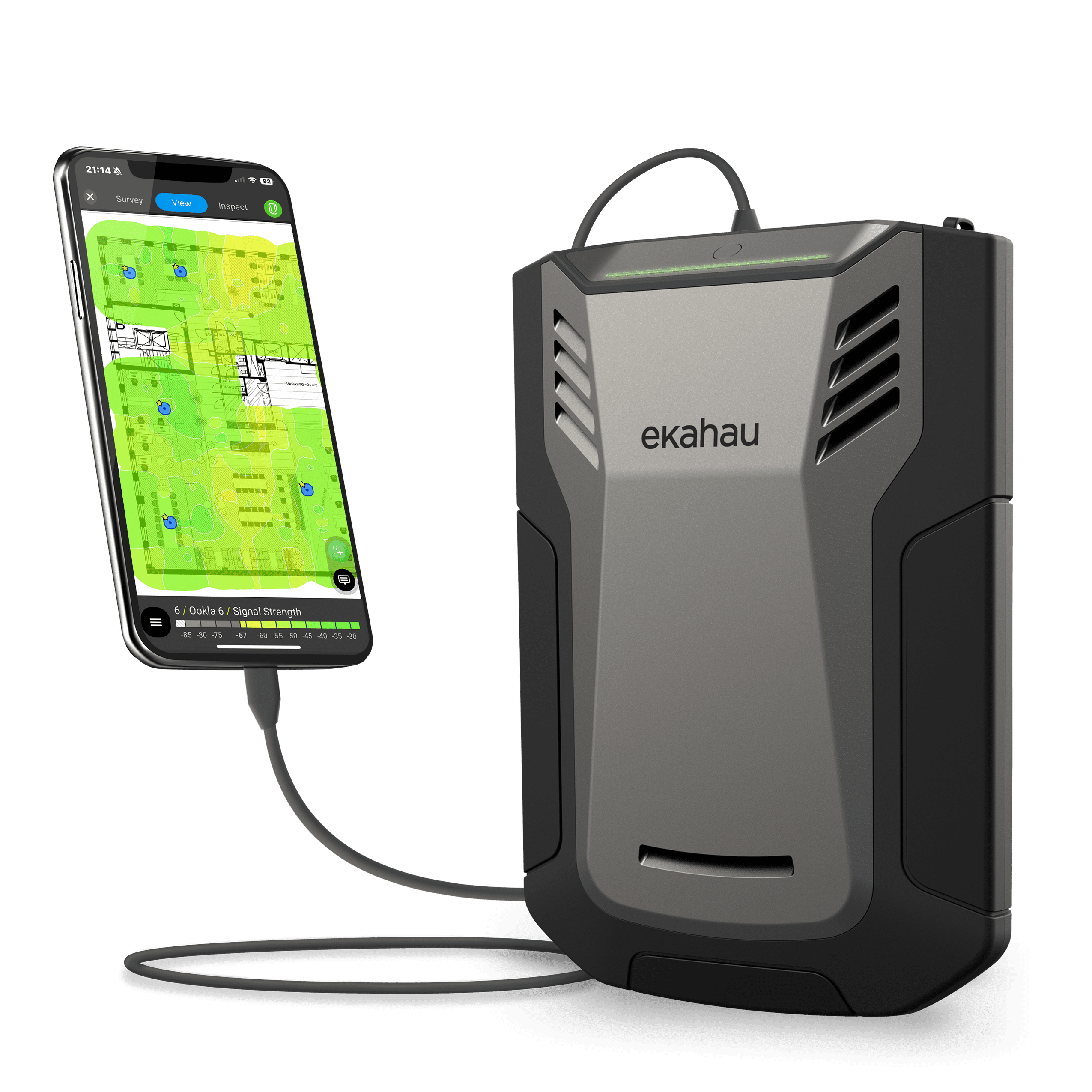
Utilising the Ekahau Sidekick 2, our engineers perform Signal-to-Noise Ratio (SNR) optimisation across the 2.4, 5, and 6GHz bands. We perform comprehensive 6GHz validation to track Dynamic Frequency Selection (DFS) events and adjust Tri-Band Spectrum Allocation to mitigate noise floor issues. This process ensures 100% stable mobility for mission-critical VoIP and video applications.

Key Focus: We specialise in WiFi 6E & WiFi 7 Readiness Assessments, providing Capacity Planning and User Density Mapping for large offices and warehouse environments.

Ekahau Sidekick 2 Workspace

WiFi 7 Readiness: Performing SNR optimisation with the Ekahau Sidekick 2.

Spectrum Analysis: Tracking interference in real-time across the spectrum.

Why is OTDR Trace Analysis vital for Fibre Reliability?

Optical Time-Domain Reflectometer (OTDR) analysis is a testing method used to characterise a fibre optic link, identifying the location of splices, connectors, and faults by measuring backscattered light.

A single broken fibre backbone can cause an immediate network bottleneck or total site outage. Our Fibre Optic Link Loss Troubleshooting service is designed to identify "invisible" physical damage that prevents high-speed data transmission.

Precision Fibre Diagnostics

We utilise OTDR Trace Analysis (Optical Time-Domain Reflectometer) to pinpoint the exact location of macrobends and microbends that cause signal attenuation. Our Broken Fibre Locating service allows for rapid Emergency Splicing and Fusion Splice Repair. Crucially, every intervention includes a Fibre End-Face Inspection (IEC 61300-3-35) to eliminate Optical Fibre Contamination—the leading cause of backbone failure in commercial networks.

Fluke Fibre Testing

OTDR Diagnostics: Mapping fibre health metre-by-metre.

Why is ISO 11801 Class EA Compliance Required for 10GbE?

ISO 11801 Class EA is the international standard for balanced copper cabling designed to support 10 Gigabit Ethernet (10GBASE-T) over distances up to 100 metres.

A "working" cable link is not always a "certified" link. Many businesses experience intermittent drops because their infrastructure fails 10GBASE-T certification despite having continuity. We provide Data Cable Fault Diagnosis that reveals exactly why your 10Gb link is only running at 1Gb.

Fluke Cable Analyser Fault Finding

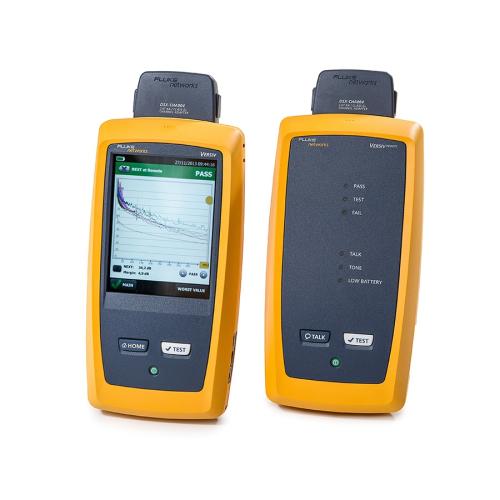
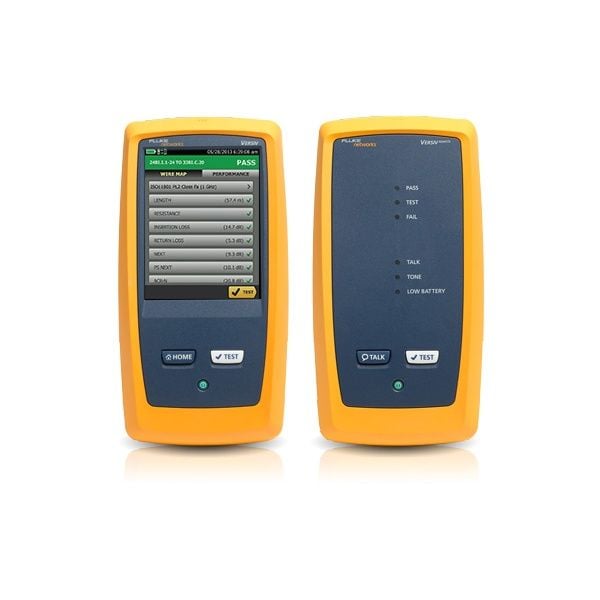
Utilising Fluke DSX-8000 cable analysers, we perform Fluke Performance Verification to identify Near-End Crosstalk (NEXT) and Alien Crosstalk (AXT) issues. Our technology provides Distance-to-Fault Pinpointing, allowing us to locate a Wiremap Failure (split pairs, shorts, or reversals) to the exact metre within a wall or ceiling void.

Download Fluke DSX Data Sheet
Fluke Copper Testing

Performance Verification: Documented proof of 10GbE compliance.

Eliminating the "Weakest Link": Identifying Network Bottlenecks

A common mistake in modern office fit-outs is investing in high-end 10Gbps switches while leaving legacy Cat5e patch leads in the cabinets. In networking, the "Weakest Link" rule applies: your data transfer rate is capped by the lowest-rated component in the chain.

The Danger of Cat5e Patch Leads on Cat6a Networks

If you connect a server via a Cat5e patch lead to a Cat6a permanent link, you have effectively choked a 10Gbps superhighway down to a 1Gbps single-lane bridge. This causes immediate latency and packet loss during high-bandwidth tasks like server backups or 4K video editing. Our network connectivity troubleshooting involves a full "component-match" audit to ensure your patch leads, modules, and backbones are all certified to the same category.

Copper vs Fibre Backbone: Which is the true bottleneck?

While copper backbone (Cat6a) is technically capable of 10GBASE-T, it is highly sensitive to Alien Crosstalk (AXT) and electromagnetic interference in tight conduits. For multi-floor or multi-cabinet environments, a fibre optic backbone is the gold standard, providing total immunity to electrical noise and significantly lower signal attenuation over distance. We provide documented proof of performance using Fluke DSX certification to ensure no such bottlenecks exist.

Comms Room & Cabinet Diagnostics

A successful 10GbE migration requires more than just new hardware; it requires a physical environment that can sustain high-frequency signals and the resulting thermal load.

Airflow Analysis & PoE Diagnostics

Poorly managed cabinets lead to Network Bottleneck Identification issues and hardware lifespan reduction. We perform detailed cabinet audits to identify airflow restrictions and cooling inefficiencies. Furthermore, as modern offices deploy more 4K security and smart lighting, our POE (Power over Ethernet) Voltage Drop Diagnostics ensure that your Cat6a cabling is delivering stable wattage (PoE++ up to 100W) without Insertion Loss or overheating issues.

Smart Site Audits: Patch App & Go

Unlabelled "mystery ports" are a significant liability during office relocations and expansions. We utilise next-generation smartphone-operated technology to bring clarity to legacy infrastructure.

Rapid Trace & Identification

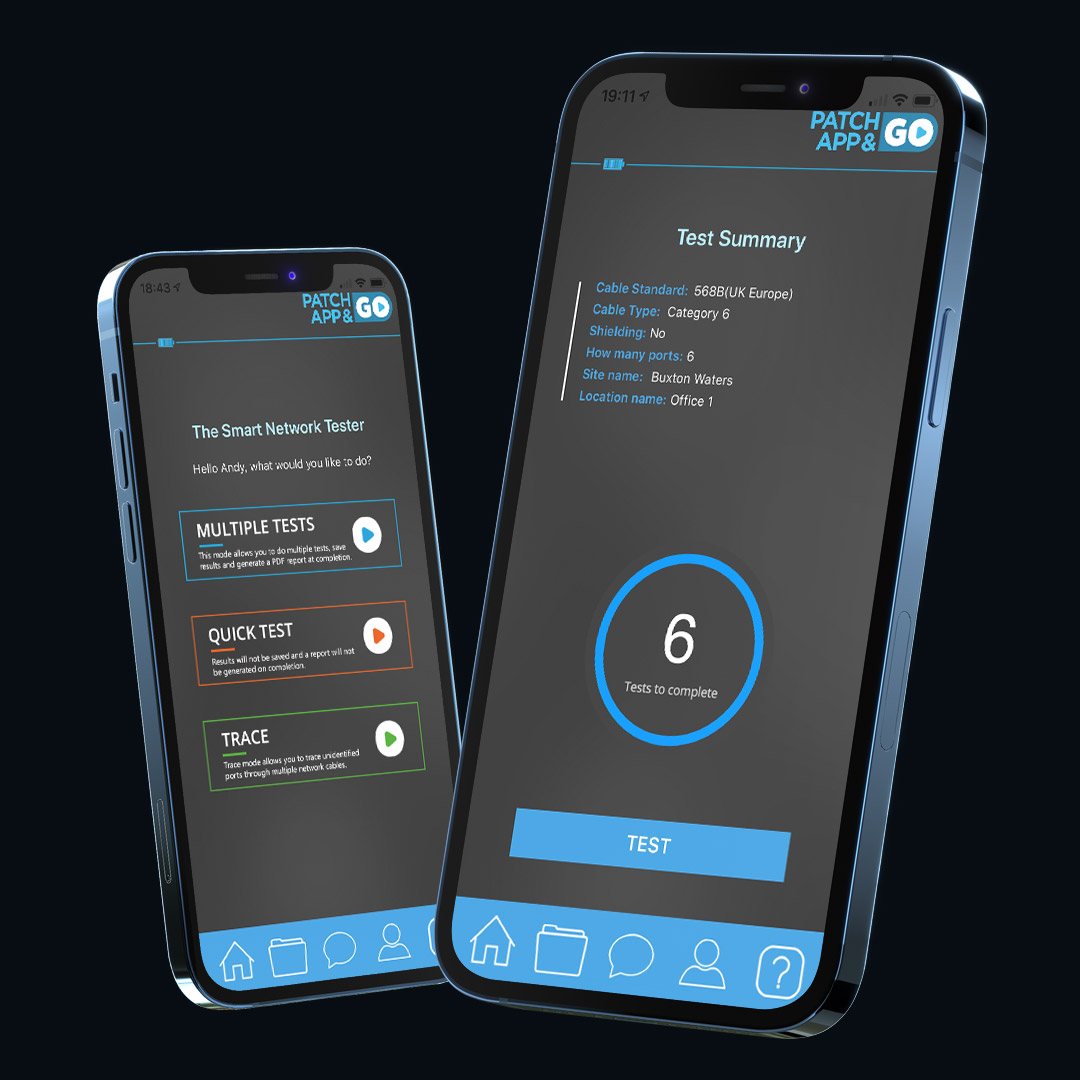
Using Patch App & Go smart remote plugs, we can identify and label up to 48 ports in a single pass. This one-man deployment methodology allows for rapid Legacy Cable Tracing and Patch Lead Integrity Testing. Clients receive instant PDF reporting of the Wiremap Failure Correction status, significantly reducing onsite labour costs and operational disruption.

Patch App & Go

Efficiency: Rapid one-man digital wiremapping.

Understanding CPR: Fire Safety Standards for Cabling

Legal Requirement

Since July 2017, the Construction Products Regulation (CPR) has mandated that all communications cabling installed permanently within a building must be tested and classified for its reaction to fire. At SignalFlow Networks, we ensure every installation meets the stringent UK and EU safety requirements.

Euroclass Reaction to Fire Typical Application & Safety Level
B2ca Very High Potential The Gold Standard. Recommended for high-risk buildings like hospitals, schools, and high-rise commercial spaces. Provides maximum protection against fire spread and heat release.
Cca High Potential The UK Enterprise Standard. Often mandated for most commercial office fit-outs and public buildings. Offers excellent fire performance and limited smoke production.
Dca Medium Potential Basic safety performance. Suitable for standard risk environments, though many consultants now default to Cca or higher for future-proofing.
Eca Basic Potential The minimum legal requirement. Provides basic flame spread resistance but offers limited protection against smoke and heat.
The Three Sub-Classifications

Beyond the main Euroclass, cables are rated on three critical secondary criteria:

s (Smoke): Rating 1 to 3. Measures the amount and speed of smoke production.
d (Droplets): Rating 0 to 2. Measures flaming droplets that could spread fire.
a (Acidity): Rating 1 to 3. Measures the corrosivity of the gas emitted.
Compliance Check

Every cable we install is accompanied by a Declaration of Performance (DoP). This document identifies the manufacturer, the unique product code, and the Euroclass rating, ensuring your project is fully compliant for insurance and building control purposes.

The "Silent Killer" of High-Speed Fibre: End-Face Contamination

In high-speed 40Gbps and 100Gbps environments, the smallest speck of dust can be catastrophic. Fibre Optic Contamination is the number one cause of network downtime, yet it is often the last thing checked during troubleshooting.

IEC 61300-3-35 Compliance

We utilise automated Fibre Inspection Probes to certify that every connector meets the IEC 61300-3-35 international standard. This process involves high-magnification digital analysis of the core, cladding, and adhesive zones of the fibre end-face. Mating contaminated connectors doesn't just block signal; it can cause permanent physical pits and scratches in the glass, requiring expensive re-termination.

Engineer's Rule: Always "Inspect before you connect." Never assume a factory-sealed patch lead is clean. We provide digital pass/fail reports for every link we test.

Core Analysis: Identifying microscopic pits and debris that cause signal reflection.

PoE Heat Dissipation: Avoiding the "Thermal Bottleneck"

As modern offices transition to PoE Lighting and high-power AV-over-IP, the physical layer is being asked to carry more current than ever. PoE++ (Type 4) delivers up to 100W, but this power generation creates significant heat within cable bundles.

Thermal Modelling for MEP Design

When cables get hot, their Insertion Loss increases. This means a 90-metre link that passed certification at 20°C may fail at 40°C. Our MEP Network Design service includes bundle-size calculations and containment planning based on TIA-184-A guidelines. We recommend Cat6a Shielded (F/UTP) for high-wattage PoE applications specifically for its superior heat dissipation properties compared to unshielded variants.

The Risk of Poor Heat Management
  • Accelerated jacket degradation
  • Signal attenuation (Insertion Loss)
  • Bit-error rate increases under load
  • Arcing damage on connector pins

Technical Glossary: Core Infrastructure Standards

What is ISO 11801 Class EA?

ISO 11801 Class EA is the international standard for balanced copper cabling designed to support 10 Gigabit Ethernet (10GBASE-T) over distances up to 100 metres.

What is Ekahau AI Pro?

The industry-standard software for predictive wireless design and site surveys, used to model RF propagation and capacity planning in complex architectural environments.

What is the "Netflix Effect" in Wireless?

A phenomenon where improper rate limiting causes devices to switch to lower-quality streams, actually increasing total network airtime usage and degrading performance for all users.

Engineering Toolkit

Knowledge Hub Topics

We invest in the world's leading diagnostic hardware to ensure your infrastructure is 100% compliant and stable.

Wireless Planning
Ekahau Sidekick 2
Copper & Fibre Certification
Fluke DSX-8000
Smart Infrastructure Audits
Patch App & Go

Diagnostic Scope
  • OTDR Trace Analysis
  • Alien Crosstalk (AXT) Testing
  • IEC 61300-3-35 Fibre Inspection
  • PoE Thermal Analysis
  • TIA-184-A Compliance
  • WiFi 7 6GHz Validation
  • Fluke DSX Certification
Speak to a Technical Adviser or PM